


Artificial Intelligence is transforming the creative industry at an unprecedented pace, but it has not replaced the strategic thinking, emotional intelligence, and brand storytelling that define exceptional graphic design.
According to the latest Gartner AI Spending Forecast 2026, worldwide AI spending is expected to reach $2.59 trillion in 2026, highlighting how rapidly businesses are integrating AI into their operations. From AI-generated logos and social media creatives to automated image editing, AI graphic design tools have accelerated production, yet they often struggle with originality, cultural relevance, and long-term brand consistency.
This has sparked the growing debate around Graphic Design vs AI, especially among startups, marketing teams, and established brands seeking sustainable competitive advantages. The reality is that successful brands combine AI-powered efficiency with professional graphic design expertise to create meaningful customer experiences.
In this comprehensive guide, we explore how AI is reshaping the design industry, where it excels, where human creativity remains irreplaceable, and why experienced graphic designers continue to deliver unmatched value in the AI revolution.
Table of Contents
How AI Is Transforming the Graphic Design Industry
Artificial Intelligence has significantly changed the way businesses, agencies, and freelance designers approach creative work. Instead of replacing designers, AI has become a powerful productivity tool that speeds up execution while allowing professionals to focus on strategy, innovation, and brand storytelling.
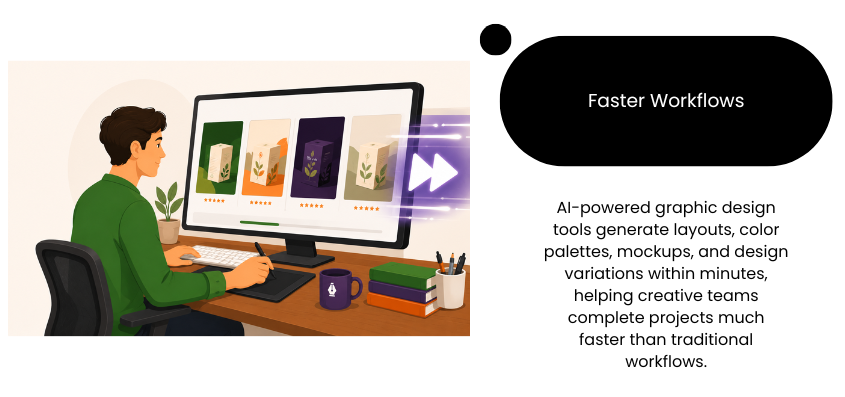
a) Faster Workflows
AI-powered graphic design tools generate layouts, color palettes, mockups, and design variations within minutes, helping creative teams complete projects much faster than traditional workflows.
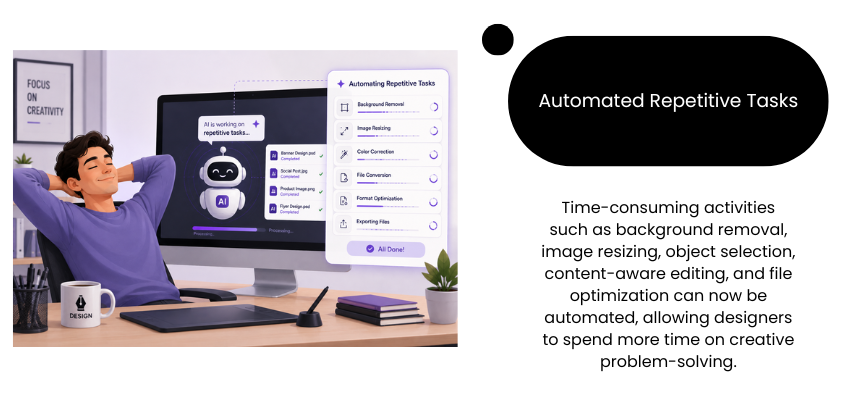
b) Automated Repetitive Tasks
Time-consuming activities such as background removal, image resizing, object selection, content-aware editing, and file optimization can now be automated, allowing designers to spend more time on creative problem-solving.
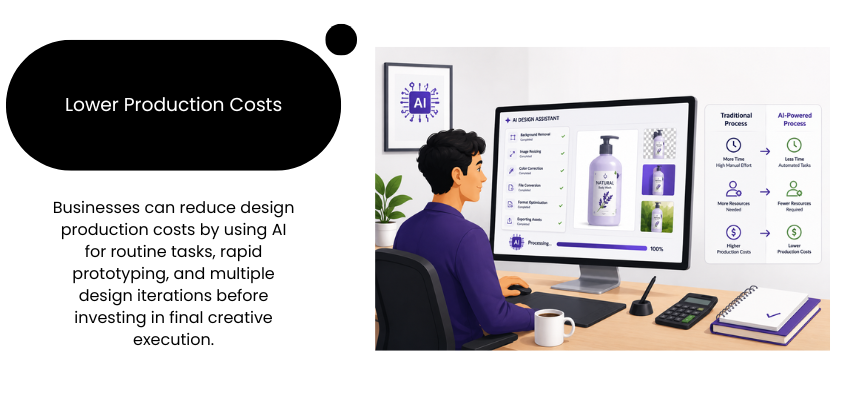
c) Lower Production Costs
Businesses can reduce design production costs by using AI for routine tasks, rapid prototyping, and multiple design iterations before investing in final creative execution.
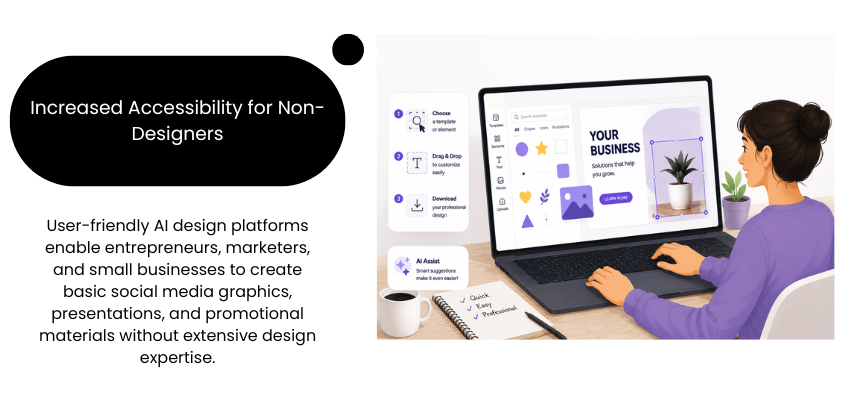
d) Increased Accessibility for Non-Designers
User-friendly AI design platforms enable entrepreneurs, marketers, and small businesses to create basic social media graphics, presentations, and promotional materials without extensive design expertise.
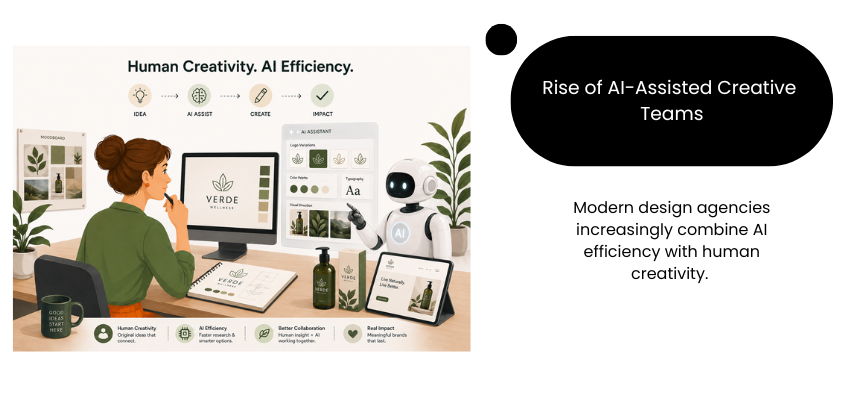
e) Rise of AI-Assisted Creative Teams
Modern design agencies increasingly combine AI efficiency with human creativity. Designers use AI as a collaborative assistant for research, ideation, and production while retaining full control over brand strategy, originality, emotional storytelling, and the final creative direction, delivering higher-quality outcomes for clients.
Graphic Design vs AI, A Feature-by-Feature Comparison
| Human Graphic Designer | AI Graphic Design |
|---|---|
| Original creative thinking | Pattern recognition |
| Strategic branding | Template generation |
| Emotional storytelling | Data-based outputs |
| Brand consistency | Requires prompting |
| Client collaboration | Limited understanding |
| Market research | Uses existing datasets |
| Cultural understanding | Can miss context |
| Problem solving | Predictive generation |
11 Reasons Human Creativity Still Wins Over AI
While AI has become an essential part of modern graphic design, it still lacks the human judgment, strategic thinking, and emotional depth required to build successful brands. Here are the key reasons why human creativity continues to outperform AI.
1. Human Designers Understand Brand Strategy
Designers align every visual element with business goals, positioning, target audience, and long-term brand identity.
2. Emotional Intelligence Creates Better Designs
Humans understand emotions, empathy, and customer psychology, helping create visuals that genuinely connect with people.
3. AI Cannot Replace Original Creative Thinking
AI learns from existing data, while designers develop fresh concepts, unique ideas, and innovative visual solutions.
4. Human Designers Solve Business Problems
Professional graphic design is about solving communication challenges, not simply producing attractive visuals.
5. Storytelling Builds Memorable Brands
Great branding combines design with compelling stories that inspire trust, loyalty, and lasting customer relationships.
6. Designers Understand Cultural and Regional Context
Experienced designers consider local traditions, language, consumer behavior, and market expectations that AI often misunderstands.
7. Human Creativity Breaks Rules to Create Innovation
The world’s most iconic designs emerged because creative professionals challenged conventional design principles rather than following predictable patterns.
8. Better Collaboration with Clients
Designers ask questions, interpret feedback, manage revisions, and transform business ideas into meaningful visual experiences through collaboration.
9. Strategic Design Thinking Creates Better ROI
Human-led design decisions improve customer perception, increase conversions, strengthen brand recognition, and deliver measurable business growth.
10. Ethics, Authenticity, and Copyright Matter
Professional designers understand intellectual property, originality, ethical branding, and responsible content creation, reducing legal and reputational risks.
11. AI Works Best as a Creative Assistant, Not a Replacement
The strongest creative outcomes come from combining AI’s speed with human imagination, strategic thinking, and artistic expertise. AI accelerates production, but people remain responsible for innovation, originality, and meaningful brand experiences.
Ultimately, the future of graphic design belongs to businesses that embrace AI as a productivity tool while continuing to invest in skilled designers who can think strategically, innovate fearlessly, and create authentic brand identities that stand out in an increasingly AI-driven marketplace.
In Which Areas Human Graphic Designers Clearly Outperform AI?
Although AI has become highly capable of generating quick visual concepts, there are several areas where human graphic designers consistently deliver superior results. Their ability to think strategically, understand business objectives, and create meaningful experiences makes them indispensable for brands.
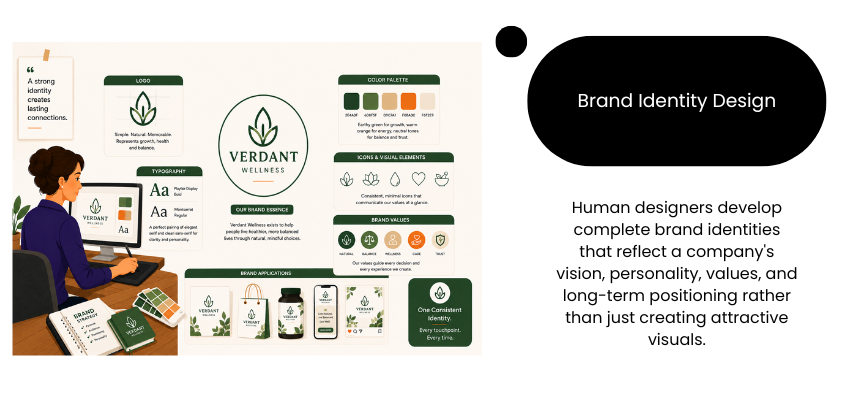
i) Brand Identity Design
Human designers develop complete brand identities that reflect a company’s vision, personality, values, and long-term positioning rather than just creating attractive visuals.
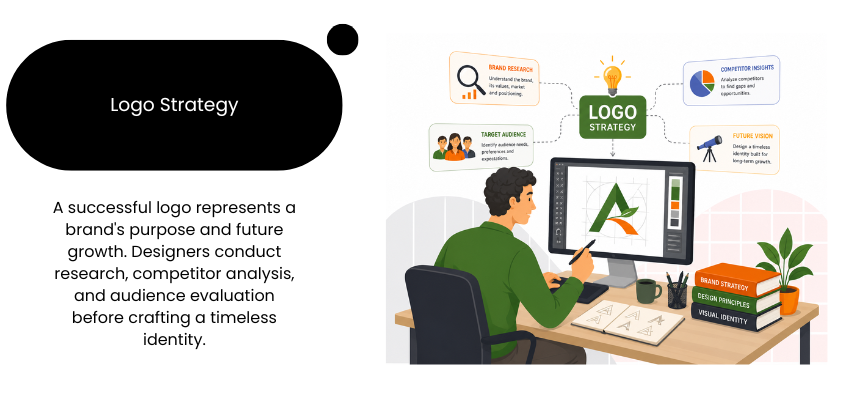
ii) Logo Strategy
A successful logo represents a brand’s purpose and future growth. Designers conduct research, competitor analysis, and audience evaluation before crafting a timeless identity.
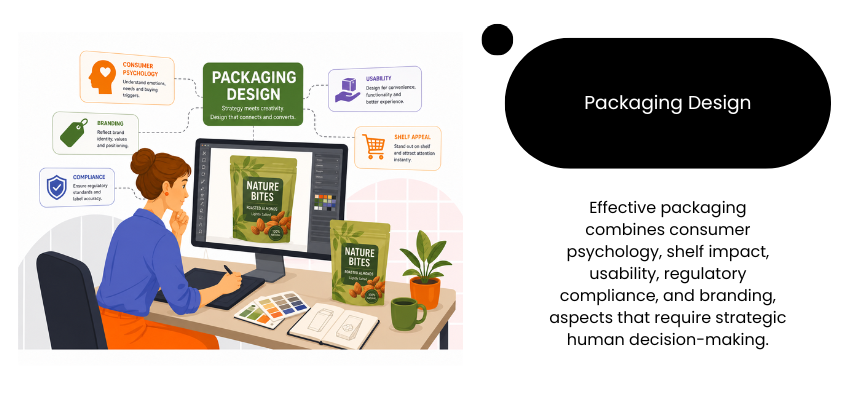
iii) Packaging Design
Effective packaging design combines consumer psychology, shelf impact, usability, regulatory compliance, and branding, aspects that require strategic human decision-making.
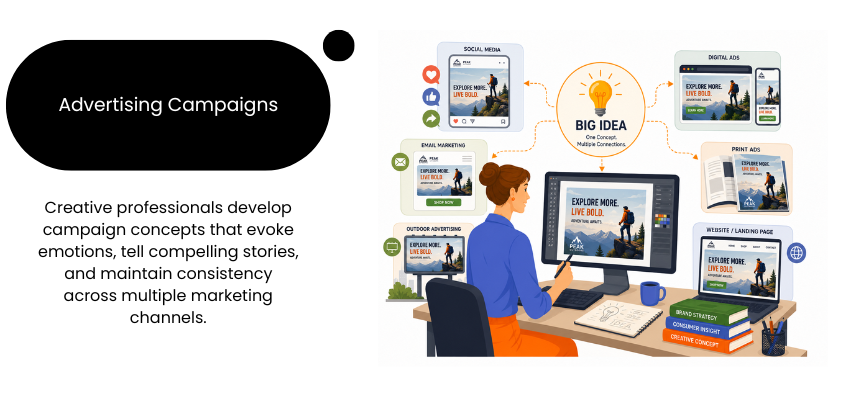
iv) Advertising Campaigns
Creative professionals develop campaign concepts that evoke emotions, tell compelling stories, and maintain consistency across multiple marketing channels.
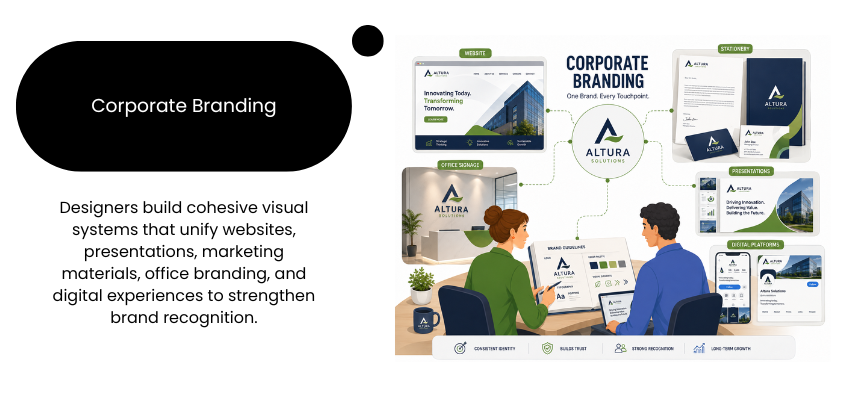
v) Corporate Branding
Designers build cohesive visual systems that unify websites, presentations, marketing materials, office branding, and digital experiences to strengthen brand recognition.
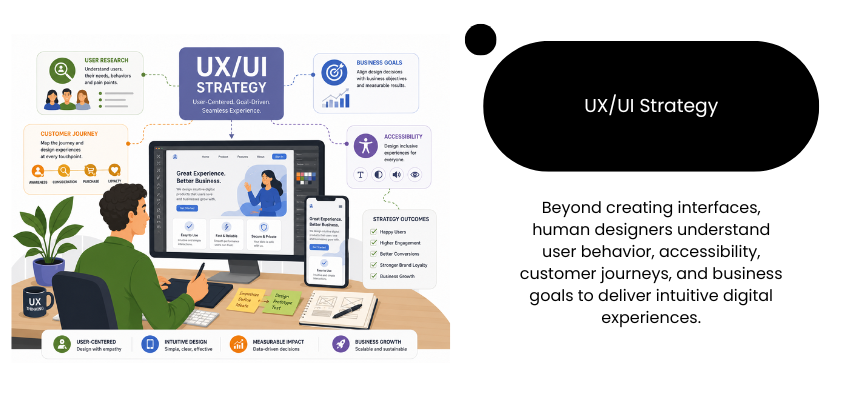
vi) UX/UI Strategy
Beyond creating interfaces, human designers understand user behavior, accessibility, customer journeys, and business goals to deliver intuitive digital experiences.
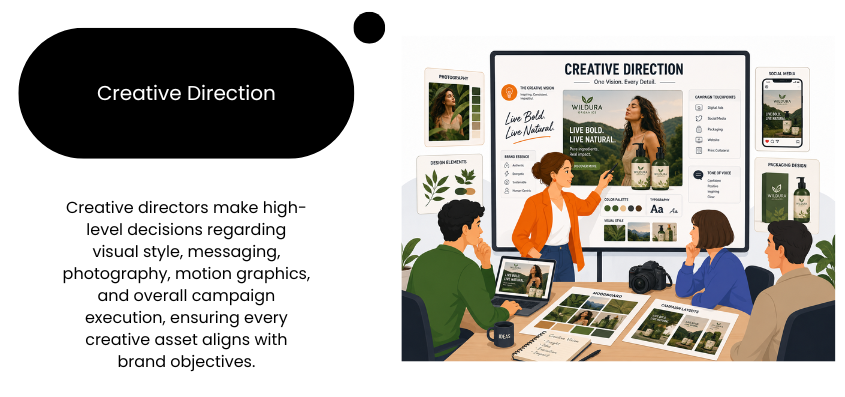
vii) Creative Direction
Creative directors make high-level decisions regarding visual style, messaging, photography, motion graphics, and overall campaign execution, ensuring every creative asset aligns with brand objectives.
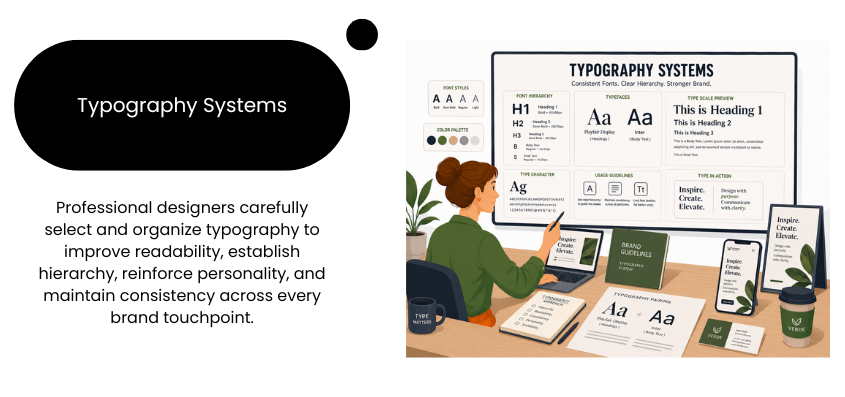
viii) Typography Systems
Professional designers carefully select and organize typography to improve readability, establish hierarchy, reinforce personality, and maintain consistency across every brand touchpoint.
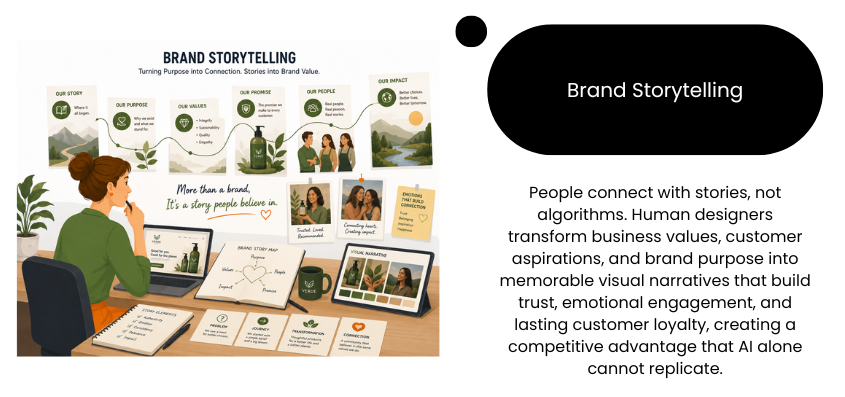
ix) Brand Storytelling
People connect with stories, not algorithms. Human designers transform business values, customer aspirations, and brand purpose into memorable visual narratives that build trust, emotional engagement, and lasting customer loyalty, creating a competitive advantage that AI alone cannot replicate.
Common Myths About AI Replacing Graphic Designers
As AI becomes more popular in the creative industry, several misconceptions continue to spread. Understanding reality helps businesses make smarter design decisions.
● Myth: AI will eliminate all design jobs
Reality: AI automates repetitive tasks, but businesses still need professional designers for strategy, creativity, and brand development.
● Myth: AI is more creative than humans
Reality: AI generates content from existing data, while human creativity produces original concepts driven by imagination and experience.
● Myth: AI understands branding
Reality: AI can follow prompts, but it cannot fully understand brand positioning, customer emotions, or long-term business objectives.
● Myth: AI creates unique designs
Reality: AI relies on patterns learned from existing content, whereas designers create distinctive visual identities tailored to each brand.
● Myth: AI doesn’t need human input
Reality: The best AI-generated designs depend on skilled human guidance, refinement, creative judgment, and strategic decision-making to produce meaningful, business-focused results.
Ultimately, AI should be viewed as a powerful creative assistant rather than a replacement for professional graphic designers. The future of the design industry belongs to those who successfully combine AI-driven efficiency with human creativity, strategic thinking, and innovation to create impactful, memorable, and authentic brand experiences.
How Professional Graphic Designers Can Stay Competitive in the AI Era?
Professional graphic designers can stay ahead by embracing AI as a productivity tool while continuously strengthening their strategic and creative capabilities. Focusing on brand strategy, design thinking, storytelling, user experience, typography, and problem-solving will create lasting value that AI cannot replicate.
Learning emerging AI design tools, improving collaboration with clients, and developing industry-specific expertise will help designers deliver more innovative, efficient, and business-driven creative solutions in an increasingly AI-powered marketplace.
Conclusion:
The debate around Graphic Design vs AI is not about choosing one over the other. It is about understanding how both can work together to create stronger, smarter, and more impactful brand experiences. AI is excellent for improving efficiency, automating repetitive tasks, and accelerating design workflows, but it cannot replace human creativity, strategic thinking, emotional intelligence, or the ability to build authentic brand identities.
If your business needs a logo, complete brand identity, packaging design, marketing creatives, or a visual strategy that truly differentiates your brand, LogoPeople combines creative expertise with the latest AI-powered tools to deliver original, business-focused design solutions that drive long-term growth.
As technology continues to evolve, brands that blend AI innovation with human creativity will gain the greatest competitive advantage. The future belongs to businesses that view AI as a creative assistant while trusting experienced graphic designers to transform ideas into memorable brands that inspire trust, engagement, and lasting customer loyalty.
Author: Megha Malik

As a passionate entrepreneur and creative brand consultant with experience of 14 years in digital, branding and packaging industry, it is my honest effort to put my experiences and knowledge of industry towards readers. A chartered accountant by degree but a marketing personality in blood has motivated her to take in designing industry as a career. With her fun-loving personality and sharp branding skills, she is a great motivational speaker on her YouTube channel, an active member in various business channels offline as well as online. Do connect me personally via my LinkedIn and I love to share my expertise with you.